Dirt & Fill Spreading in Chandler, AZ
Topsoil, fill dirt, and mulch — delivered piles turned into level, graded ground. Pool backfill leveling, low-spot fixes, pre-sod and pre-turf grading, mulch beds. The pile shows up; we make it disappear into flat, usable yard.
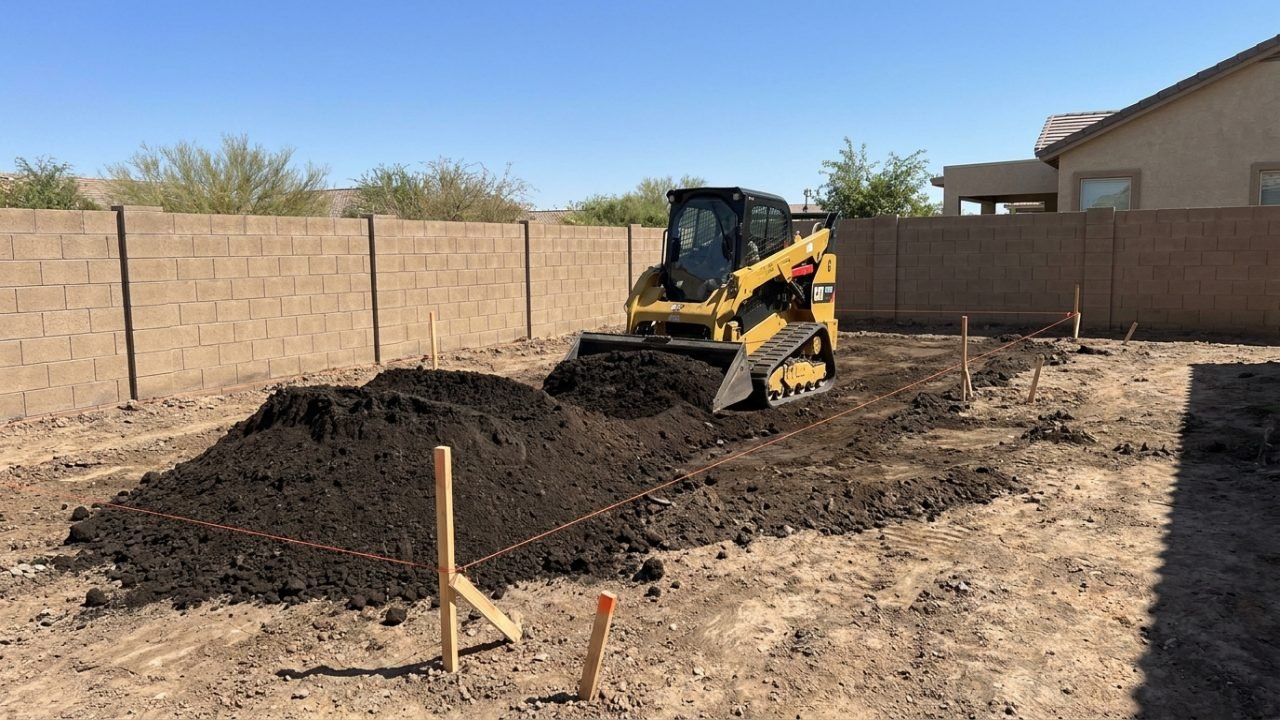
Do you spread fill dirt in Chandler?
Yes — Chandler is core East Valley territory for us, and dirt work is one of our three main services alongside rock spreading and haul-off. Whether a supplier dropped 12 yards of fill in your driveway or you need us to arrange the material too, our compact skid steer (it fits through a standard side gate) moves it, spreads it, and grades it level. Typical one-day turnaround; 2–3 days standard.
What we spread
Fill dirt
Pool backfill leveling, raising low spots, building up grade before hardscape or turf.
Topsoil
Planting beds, pre-sod prep, and finishing layers where things need to actually grow.
Mulch
Beds and tree rings spread to a consistent depth — no more mountain by the mailbox.
Need rock instead? See our rock spreading service or the full rock removal & replacement swap.
How many yards of dirt do I need?
Multiply your area in square feet by the depth in inches, then divide by 324 — that’s your cubic yards. Fill dirt runs roughly 1.3 tons per yard, so tons ≈ yards × 1.3 (both figures approximate; moisture changes weight). Or skip the math and use the calculator:
Fill Volume Calculator
Yards = sq ft × inches ÷ 324. Tons ≈ 1.3 × yards for fill dirt — approximate; actual weight varies with moisture. Flat spreading tiers apply to spreading to a consistent depth; grading to dead level (pool backfill, pre-turf base) can take more machine time, so precision grading gets a custom flat quote. Text a photo for your firm number.
How much does dirt spreading cost?
Spreading runs on the same flat tiers as our rock work — $495 for up to 5 tons, approximately $700 for 6–9 tons, approximately $995 for 10–15 tons, and a custom flat quote at 16+ tons. No hourly billing, ever. Jobs that need grading to a precise level (pool backfill compaction passes, pre-artificial-turf base) are quoted custom because level-grading takes more machine time than a decorative 2″ spread — but it’s still one flat number before we start.
| Material moved | Flat rate |
|---|---|
| Up to 5 tons | $495 |
| 6–9 tons | $700 |
| 10–15 tons | $995 |
| 16+ tons / precision grading | Custom flat quote |
Grading that sends water away from the house
Good dirt work slopes away from foundations — the general guidance is roughly a 2% fall (about a quarter inch per foot) for the first several feet off the house, so monsoon water drains to the yard, not the stem wall. That’s general best practice, not an engineered drainage plan; if your lot has a real drainage problem, we’ll tell you straight whether spreading and regrading will fix it or whether you need a civil/drainage contractor.
Common Chandler jobs
New-build blank yards
Ocotillo and south Chandler builds often hand you bare, lumpy grade. We level it into a ready canvas for rock, turf, or planting.
Post-monsoon low spots
Standing water after a storm marks your low spots for you. Fill dirt spread and feathered in makes them drain instead of pond.
Pre-turf base prep
Artificial turf is only as flat as what’s under it. We spread and level the base material before your turf installer shows up.
What we don’t do
Fine-finish laser grading for concrete pads and footings isn’t our lane — that’s a laser-screed specialty, and we’d rather refer you to someone who does it daily than deliver a pad base we can’t stand behind. For yards, beds, backfill, and turf prep: that’s exactly our lane.
Got a pile? Get it graded flat.
Text a photo of the pile or the yard to (602) 918-5369 — firm flat quote usually within the hour. Family-owned 30+ years · licensed & insured · email info@rockspread.com
Dirt & Fill FAQs
Should I order dirt by the yard or by the ton?
Dirt is usually sold by the cubic yard, while rock is sold by the ton. For fill dirt, figure roughly 1.3 tons per yard (approximate — moisture matters). Our calculator above converts both ways; tell us either number and we’ll translate it into the right spreading tier.
Does wet dirt change scheduling?
Yes — saturated fill is heavier, smears instead of grading clean, and can rut the yard under the skid steer. After a heavy monsoon soak we may push a grading job a day or two so the material works properly. Dry-season scheduling is rarely affected.
Can you spread dirt over existing grass?
Thin leveling lifts (under about an inch) can be spread over living grass, which usually grows through. Anything deeper smothers it — so for real fills we recommend scraping or killing off the old grass first, and we can handle the removal side too.
How deep should mulch be spread?
Two to three inches is the common recommendation for beds — enough to hold moisture and suppress weeds without smothering roots. Keep it pulled back a few inches from trunks and stems. We spread to whatever consistent depth you choose.
My yard drains toward the house — can you fix that?
Often, yes: regrading with fill so the ground falls away from the foundation (roughly 2% as general guidance) solves many simple cases. If water is coming from a neighbor’s lot or a hard low point below street level, we’ll say so honestly — some situations need a drainage contractor, not just dirt.
Do you compact the dirt after spreading?
We track-pack with the skid steer as we grade, which settles fill well for yards, beds, and turf base. Engineered compaction with density testing (for structures or concrete) is outside our scope — we’ll tell you when a job calls for that and point you to the right specialist.